Ovulation and your period are linked, but they are not the same thing and they do not always come as a pair. In a typical cycle you ovulate first, and your period arrives about two weeks later if you are not pregnant. Yet you can bleed in a cycle without ovulating, and you can ovulate before a period shows up, for example after giving birth or stopping birth control. Knowing how the two fit together helps you read your cycle and avoid a few common surprises.
The short version
- In an ovulatory cycle, the period usually starts about 12 to 14 days after ovulation.
- Ovulating during your period is very unlikely, but with a short cycle it can happen soon after bleeding stops.
- Getting pregnant from sex on your period is uncommon but possible, because sperm can survive up to about five days.
- Bleeding without ovulation (an anovulatory cycle) is common in teens and in the years before menopause.
- After birth or stopping birth control, ovulation can come back before your first period does.
How ovulation and your period connect
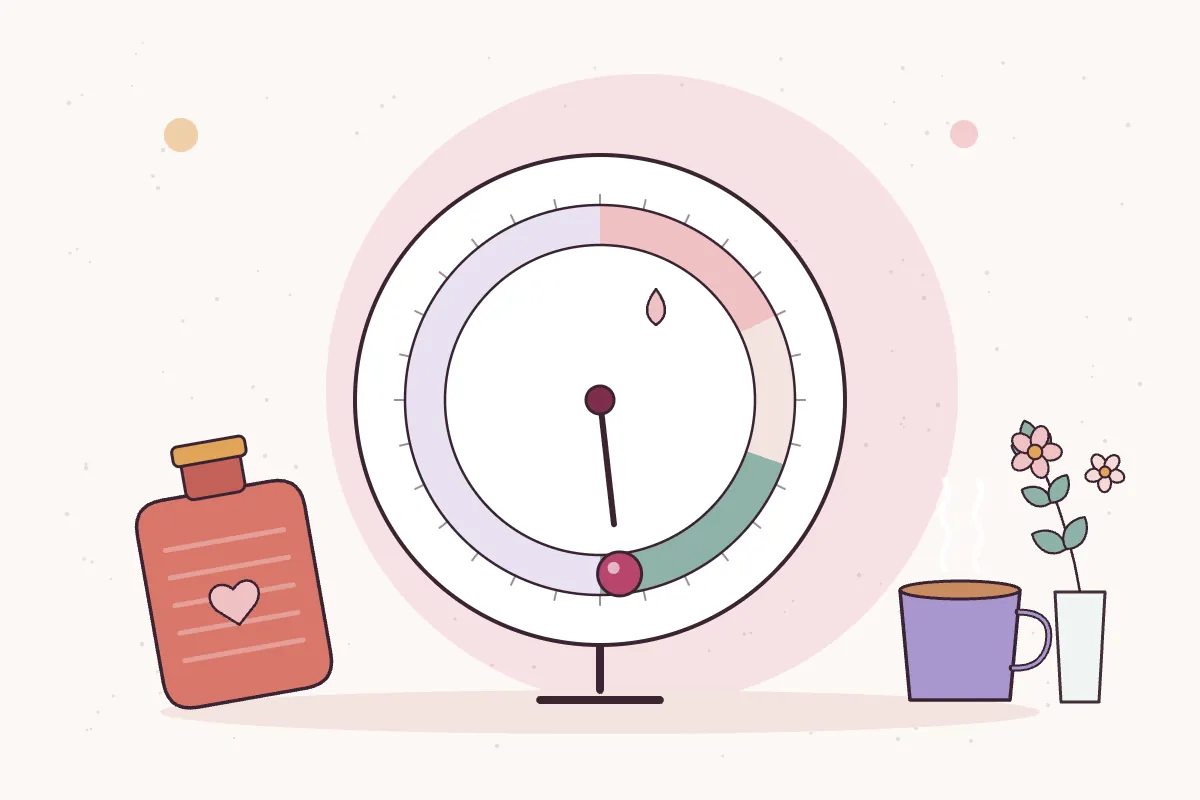
Each cycle, rising estrogen thickens the lining of the uterus. After ovulation, the emptied follicle (corpus luteum) makes progesterone, which prepares that lining for a possible pregnancy. If no pregnancy happens, the corpus luteum fades after about 12 to 14 days, progesterone drops and the lining sheds. That shedding is your period. So in a typical cycle, the period is the end point of the ovulation that came before it, not the start of the next one. Our guide on what ovulation is explains the hormones in more detail.
Can you ovulate during or right after your period?
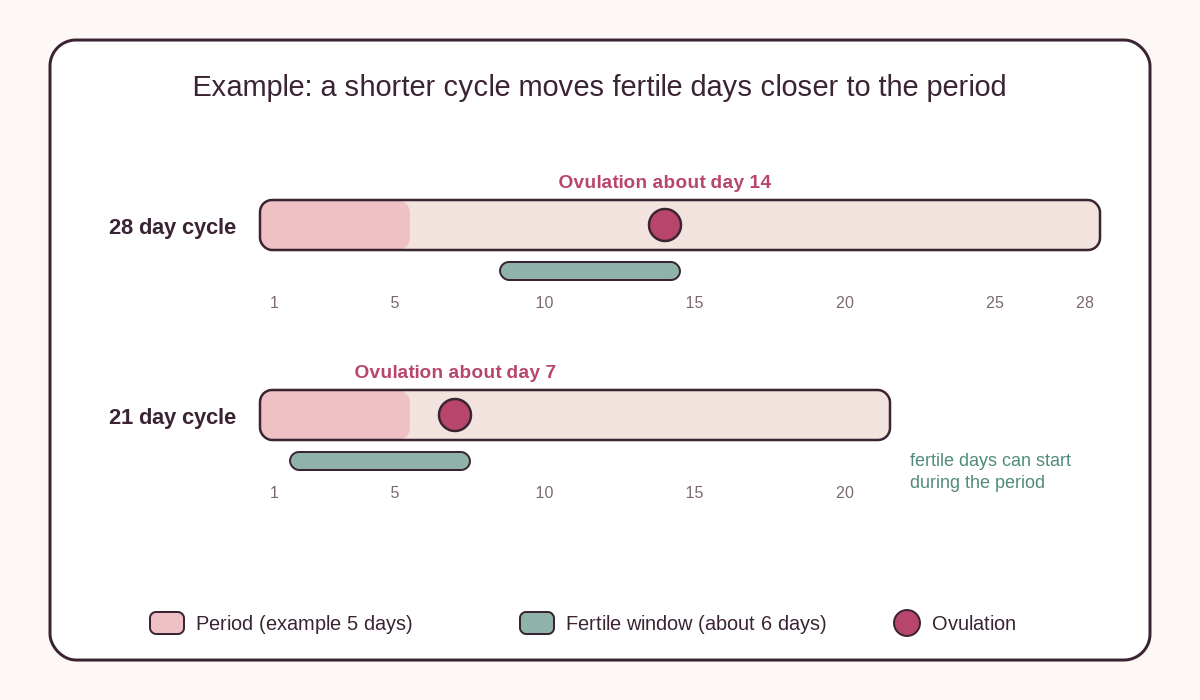
Ovulating while you are still bleeding is very unlikely in a normal cycle. Ovulating shortly after your period ends is quite possible, though. Ovulation tends to happen about 12 to 14 days before your next period, so the shorter your cycle, the closer it moves to the end of your bleeding. With a 21 day cycle, ovulation may fall around day 7. If your period lasts five or six days, that is just a day or two after it stops.
Can you get pregnant on your period?
It is uncommon, but yes. The NHS states that there is a chance of pregnancy from unprotected sex at any point in the cycle, including during or right after a period. The reason is timing: sperm can survive in the body for up to about five days. If you have sex near the end of your period and ovulate early, sperm may still be there when the egg is released. This is most likely with short cycles, irregular cycles, or long periods.
There is a second reason for surprises: not every bleed is a period. Light bleeding around ovulation, or bleeding for other reasons, can be mistaken for a period. Sex during that bleed may actually be in the fertile window. If you have unexplained bleeding between periods, see our guide on bleeding around ovulation.
A period without ovulation: anovulatory cycles
A cycle in which no egg is released is called an anovulatory cycle. Bleeding can still happen, because estrogen alone can build up the lining until it becomes unstable and sheds. These bleeds are often less predictable: heavier or lighter, earlier or later, or longer than usual.
Anovulatory cycles are common and expected in some phases of life:
- The first years after periods begin. Research on adolescent cycles shows that many cycles in the first one to two years after the first period are anovulatory, and regular ovulation becomes established over several years.
- The years before menopause (perimenopause). Ovulation becomes less regular, which is one reason cycles change length.
Repeated anovulatory cycles at other times are worth checking. Common causes include polycystic ovary syndrome (PCOS), thyroid problems, high prolactin, very low body weight, intense exercise, significant stress and some medications. A doctor can look for the cause, especially if you want to get pregnant.
How to tell if a cycle was ovulatory
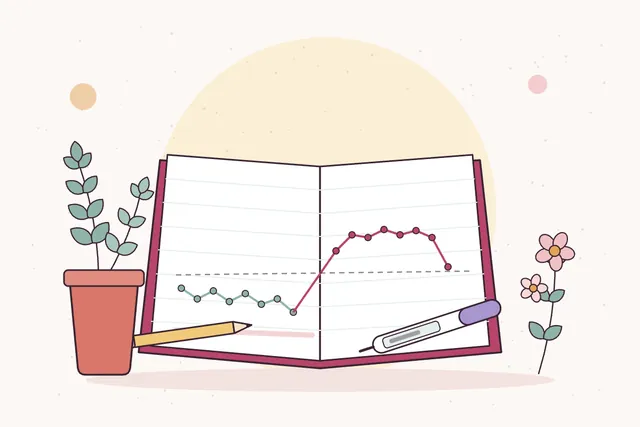
A sustained rise in resting body temperature in the second half of the cycle, a positive LH test followed by your period about two weeks later, and clear, stretchy mucus before that are all signs that ovulation probably happened. None of them is perfect on its own. Our guide to signs of ovulation covers how to use them together.
Ovulation without a period
Because ovulation comes before the period, your first ovulation after a long break always happens before your first period. That is easy to forget, and it is why pregnancy is possible even when your periods have not come back yet.
After giving birth
The NHS says you can get pregnant as soon as three weeks after giving birth, even if you are breastfeeding and your periods have not returned, and advises using contraception from 21 days after birth if you do not want another pregnancy. If you are not breastfeeding, or are combining breast milk and formula, your first period may come back within several weeks.
While breastfeeding
Frequent, exclusive breastfeeding suppresses ovulation for many people, but not reliably for everyone. Breastfeeding used as a formal method, called the lactational amenorrhea method, only applies when all three conditions are met: the baby is under six months old, gets only breast milk day and night, and your periods have not returned. Once any of those changes, ovulation can return at any time, and it will come before your first period.
Perimenopause
In the years before menopause, periods can be months apart, yet ovulation can still happen in between. Cleveland Clinic notes that pregnancy remains possible until menopause, which is defined as 12 months in a row without a period. If you do not want to get pregnant, keep using contraception until your clinician confirms you no longer need it.
Your first ovulation after birth control
How quickly ovulation returns depends on the method:
| Method | What to expect |
|---|---|
| Combined pill, patch or ring | Ovulation can resume within weeks of stopping. The first bleed after stopping is a withdrawal bleed, not a true period, so the first "real" cycle may be longer or shorter than you expect. For many people cycles settle within a few months. |
| Hormonal or copper IUD, implant | Fertility usually returns quickly after removal, often within the first cycle or two. |
| Contraceptive injection (Depo-Provera) | Return of ovulation can be delayed for many months after the last shot. According to the product information, about 68 percent of people trying to conceive did so within 12 months of the last injection and about 93 percent within 18 months. |
Since you cannot see your first ovulation coming, assume you may be fertile as soon as you stop, unless you want to wait. If you are trying to conceive, it can help to track a few cycles with our period calculator so you know your new pattern, then use the ovulation calculator to estimate your fertile days.
Why period tracking is not birth control
Since ovulation can come early, late or before a period has returned, counting days from your period is not a reliable way to avoid pregnancy. Fertility awareness based methods taught by a trained instructor combine several body signs and are more effective than counting alone, but they still fail more often in typical use than most other methods, and they are not suited to times of irregular cycles such as after birth or in perimenopause.
When to see a doctor
- You have missed three or more periods in a row and you are not pregnant, breastfeeding or using a method that stops periods.
- Your periods have not returned within a few months of stopping the pill, or your cycles are often shorter than 21 or longer than 35 days.
- You are under 35 and have tried to conceive for 12 months, or 35 or older and have tried for 6 months. Over 40, or with irregular or absent periods, ask for advice early.
- You have severe or one-sided pelvic pain, especially with fainting, fever or vomiting. Seek urgent care.
- You have very heavy bleeding (soaking a pad or tampon every hour for several hours), bleeding after sex, or any bleeding after menopause.
- You have a positive pregnancy test with pain or bleeding.
Frequently asked questions
Can I ovulate and have my period at the same time?
Not in a typical cycle. Bleeding that happens around ovulation is usually light spotting, not a period. If you regularly have bleeding mid-cycle, mention it to your doctor.
How many days after my period do I ovulate?
It depends on your cycle length rather than the length of your period. See when you ovulate for a table by cycle length.
Can I get pregnant before my first period after having a baby?
Yes. Ovulation happens before the first period returns, so pregnancy is possible even if you have not had a period since giving birth.
Does a regular period prove I am ovulating?
Regular cycles are a good sign, and most of them are ovulatory, but they are not proof. Charting your temperature, using LH tests or a blood test for progesterone in the second half of the cycle can confirm ovulation.
Sources
- NHS: Sex and contraception after birth
- NHS: Can I get pregnant if I have sex during my period?
- NHS: When will my periods start again after pregnancy?
- Cleveland Clinic: Can you get pregnant during perimenopause?
- Cleveland Clinic: Luteal Phase
- Cleveland Clinic: Ovulation
- Pfizer: Depo-Provera CI prescribing information (return to fertility)
- Carlson LJ, Shaw ND. Development of ovulatory menstrual cycles in adolescent girls. Journal of Pediatric and Adolescent Gynecology, 2019
- HSE (Health Service Executive, Ireland): Contraceptive methods and fertility
- CDC: About heavy menstrual bleeding
- Mayo Clinic: Amenorrhea
- American Society for Reproductive Medicine: Fertility evaluation of infertile women, committee opinion